Thomas Pet Rx
Fish Flox (Ciprofloxacin) 500 mg Capsules and Tablets for Aquarium Fish
- SpeciesOrnamental and aquarium fish
- FormCapsule or tablet
- Strength500 mg per capsule or tablet
- Pack500 mg · 30 capsules
In stock
500 mg · 30 capsules
The Fish Flox guide: ciprofloxacin for aquarium fish
Fish Flox is ciprofloxacin at 500 mg per capsule or tablet for ornamental and aquarium fish. Ciprofloxacin is a fluoroquinolone, one of the most potent antibiotic classes against gram-negative bacteria, the group behind many fast-moving ulcer, gill and body infections in fish.
It comes as capsules or tablets, in bottles of 30 or 60. This guide explains how fish ciprofloxacin works, when its strength is justified, what affects how well it works, and how to treat safely.
Fish Flox at a glance
| Active ingredient | Ciprofloxacin |
|---|---|
| Drug class | Fluoroquinolone antibiotic |
| Strength | 500 mg per capsule or tablet |
| Form | Capsule or tablet |
| Pack sizes | 500 mg · 30 capsules, 500 mg · 60 capsules, 500 mg · 30 tablets, 500 mg · 60 tablets |
| Labeled for | Ornamental and aquarium fish |
What is Fish Flox (ciprofloxacin)?
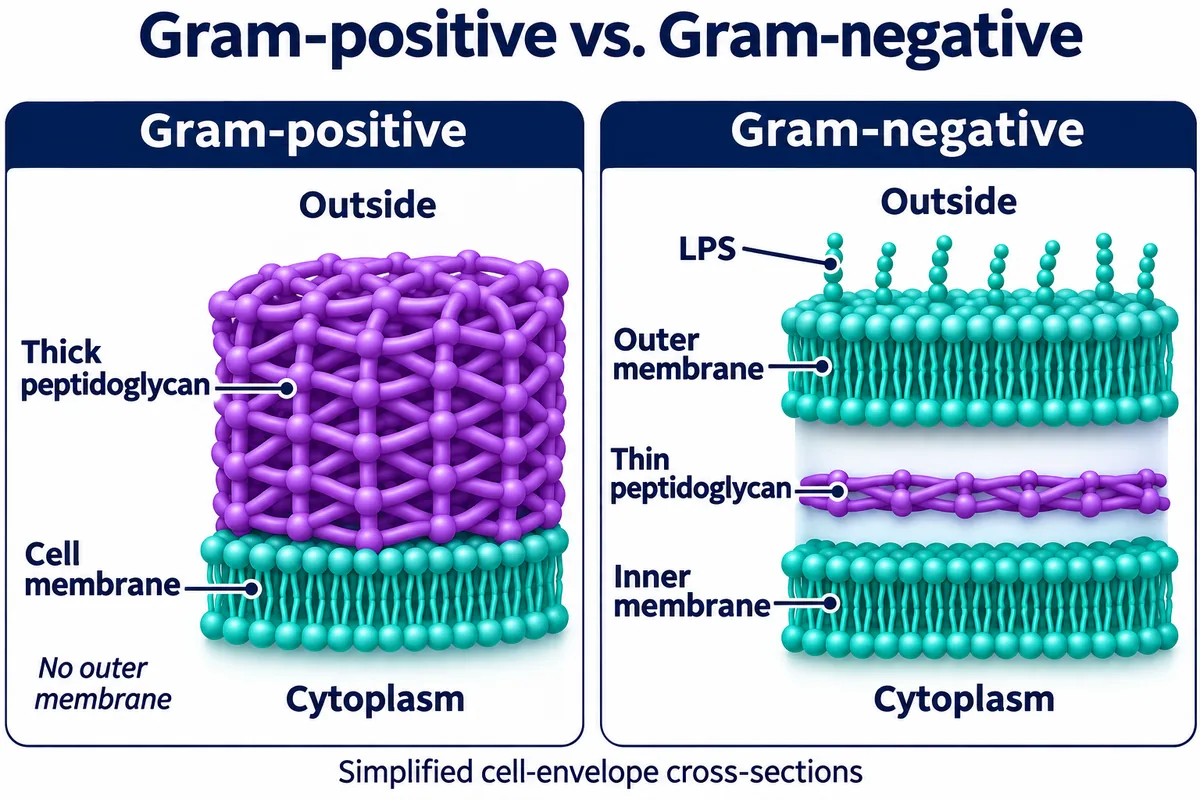
Fluoroquinolones block two enzymes, DNA gyrase and topoisomerase IV, that bacteria need to copy their DNA. Without them, bacteria cannot divide and die, so ciprofloxacin is bactericidal.
Ciprofloxacin is especially strong against gram-negative bacteria, including Aeromonas, Pseudomonas and Vibrio, with more modest activity against gram-positive species. Because it is so effective, it is worth keeping for the infections that need it: using powerful antibiotics only where they fit is how they stay effective.
What fish ciprofloxacin is used for
Aquarists keep ciprofloxacin for serious infections:
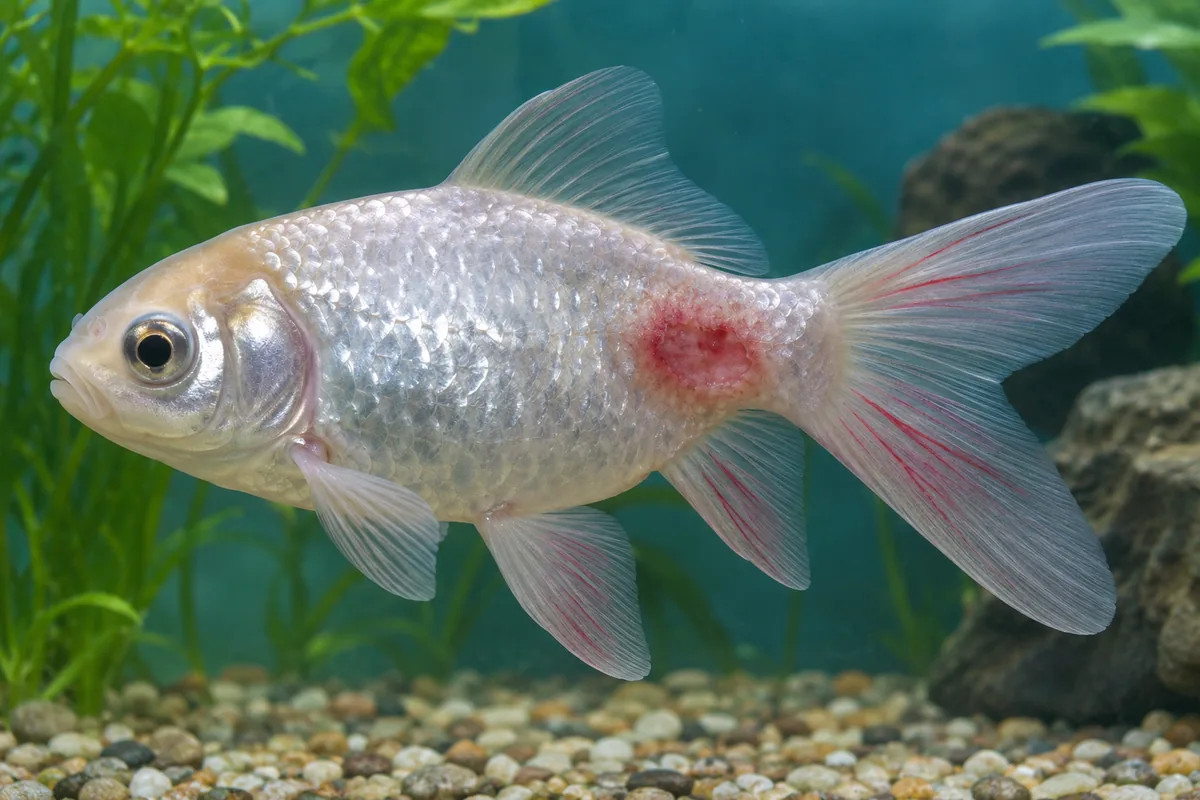
- Ulcers and red sores: deep or spreading ulcers and bloody patches, often linked to Aeromonas and Pseudomonas.
- Body-wide infections: red streaks in the fins, reddened skin and a fish that stops eating, signs that bacteria may have reached the bloodstream.
- Gill infections: swollen, pale or damaged gills and rapid breathing that continue after water quality is corrected.
- Infections that resisted a first-line drug: cases where amoxicillin or cephalexin made no difference.
Ciprofloxacin does not treat parasites, fungi or viruses, and it is too strong a tool for small, early infections a first-line drug can handle.
Recognising a serious gram-negative infection
Gram-negative bacteria such as Aeromonas and Pseudomonas live in every aquarium and attack when fish are weakened. The signs tend to be dramatic: red streaks in the fins, bloody patches or ulcers on the body, raised scales, bulging eyes, rapid breathing, and a fish that stops eating and hangs near the surface or the bottom.
These infections can move from the skin into the bloodstream within days, so they deserve prompt, effective treatment. Before reaching for any antibiotic, test and correct the water, because poor water quality causes or worsens most of these outbreaks.
Using a strong antibiotic responsibly
Fluoroquinolones are important in human and veterinary medicine, and bacteria that become resistant to them are hard to treat. Keep ciprofloxacin for serious infections, give the full course at the amount on the label, and do not use it on fish that look only slightly unwell. When an infection does not respond, ask for a culture rather than stepping from drug to drug.
How Fish Flox compares with other fish antibiotics
Ciprofloxacin and levofloxacin are close relatives, while sulfamethoxazole with trimethoprim offers broad gram-negative cover by a different route.
| Product | Active ingredient | Best suited to |
|---|---|---|
| Fish Levofloxacin 500 mg Tablets | Levofloxacin | The same family, with better gram-positive reach |
| Fish Sulfa (Sulfamethoxazole/Trimethoprim) 960 mg Tablets | Sulfamethoxazole and trimethoprim | Broad cover by a different mode of action |
| Fish Mox (Amoxicillin) Capsules | Amoxicillin | Milder, first-line infections |
| Fish Minocycline 100 mg Capsules | Minocycline | A broad tetracycline alternative |
Choosing your Fish Flox pack
Choose capsules or tablets as you prefer; both hold 500 mg of ciprofloxacin. The 30-count bottle covers a typical course for one aquarium, and the 60-count bottle suits larger volumes or more than one tank. The label gives the amount per volume of water and the length of the course.
Before you treat with Fish Flox
- Test ammonia, nitrite, nitrate and pH first. Poor water quality causes many of the same signs as infection, and it has to be put right whatever else you do.
- Move affected fish to a bare hospital tank when you can. It protects the display tank's filter bacteria, plants and invertebrates, and lets you treat an exact volume.
- Work out the real water volume. Gravel, rock and decor take up space, so a tank holds less than its nominal size.
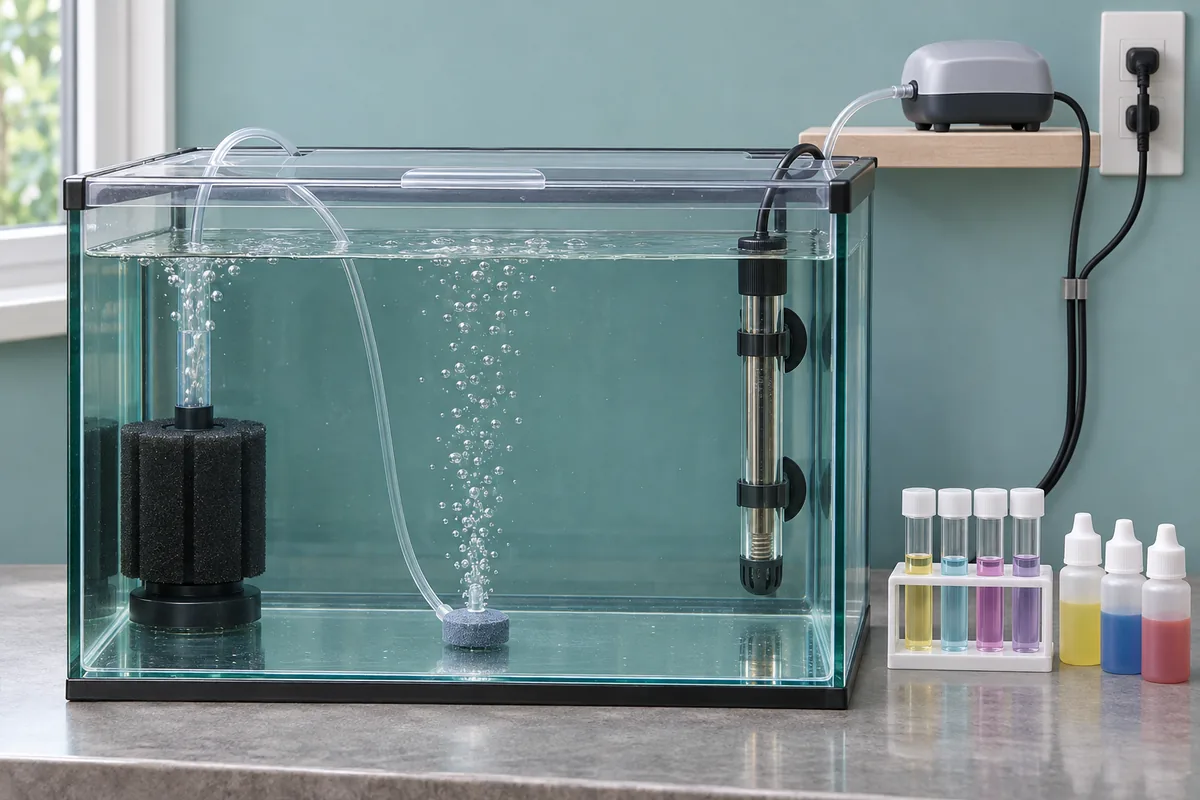
- Take activated carbon and other chemical media out of the filter, and switch off any UV sterilizer: both remove or break down medication.
- Check water hardness. Like the tetracyclines, fluoroquinolones bind calcium and magnesium, so very hard water and saltwater can reduce how much drug is available.
During treatment with Fish Flox
- Follow the directions printed on your bottle for the amount, how often to give it and how long the course lasts.
- Finish the full course even when fish improve early. Stopping short leaves the hardiest organisms behind.
- Increase aeration. Sick fish need more oxygen, and warm water holds less of it.
- Test ammonia and nitrite every day or two, because medication can slow the filter, and change water as the label directs.
- Use one medication at a time unless a veterinarian advises otherwise.
- Fluoroquinolones are sensitive to light, so keep the tank lights low during treatment.
Signs Fish Flox is working, and when to get help
Ciprofloxacin acts quickly against susceptible bacteria. Within a few days, fish should breathe more easily, eat again and stop developing new red patches. Ulcers then close from the edges over one to several weeks.
If fish worsen during the course, the bacteria may be resistant. Ask an aquatic veterinarian for a culture rather than trying antibiotics one after another.
Fish Flox safety and storage
Keep the bottle closed, in a cool, dry, dark place, out of reach of children and pets, and wash your hands after handling. Fluoroquinolone resistance is a public health concern, so finish every course, never use the product for people or for fish kept for food, and dispose of unused product as your local guidance for medicines directs.
Fish Flox: frequently asked questions
Capsules or tablets: what is the difference?
Both contain 500 mg of ciprofloxacin. Choose the form you find easier to handle; tablets cost a little more per pack. Follow the label for the form you buy.
Is ciprofloxacin safe for my filter?
It is a strong antibacterial and can set back filter bacteria. Treat in a hospital tank where possible, or test ammonia and nitrite every day or two.
Can I use Fish Flox in saltwater?
Magnesium and calcium in seawater bind fluoroquinolones and reduce their effect. Check the label and ask a veterinarian before treating marine fish, and keep invertebrates out of medicated water.
Why not use ciprofloxacin for every infection?
Strong antibiotics used too often stop working as bacteria adapt. Keeping ciprofloxacin for the infections that need it protects its effectiveness for when it really matters.
How is Fish Flox different from Fish Levofloxacin?
Both are fluoroquinolones. Levofloxacin reaches gram-positive bacteria somewhat better, while ciprofloxacin is among the strongest against gram-negative species.
Should I use Fish Flox for dropsy?
Dropsy, with a swollen body and scales that stand out like a pinecone, is a sign of organ failure, often from bacterial infection. A strong antibacterial is sometimes tried, but many fish do not recover; isolate the fish and ask a veterinarian.
For ornamental and aquarium fish only. Not for human use, and not for fish kept for food. This page is general information, not veterinary advice: if you are not sure what your fish has, ask an aquatic veterinarian.
Label facts
- Full item name
- Fish Flox (Ciprofloxacin) 500 mg Capsules and Tablets for Aquarium Fish
- Labeled species
- Ornamental and aquarium fish
- Active ingredient
- Ciprofloxacin
- Strength
- 500 mg per capsule or tablet
- Form
- Capsule or tablet
Questions about diagnosis, which medication to use or how much to give belong with a veterinarian. Our support team can help with orders, shipping and returns.
Reviews
No reviews yet.